
AI Agents Must Be Governed Like Employees
AI agents are becoming identity-bearing actors inside enterprises. Governance must evolve to treat them like employees for access, monitoring, and lifecycle control.
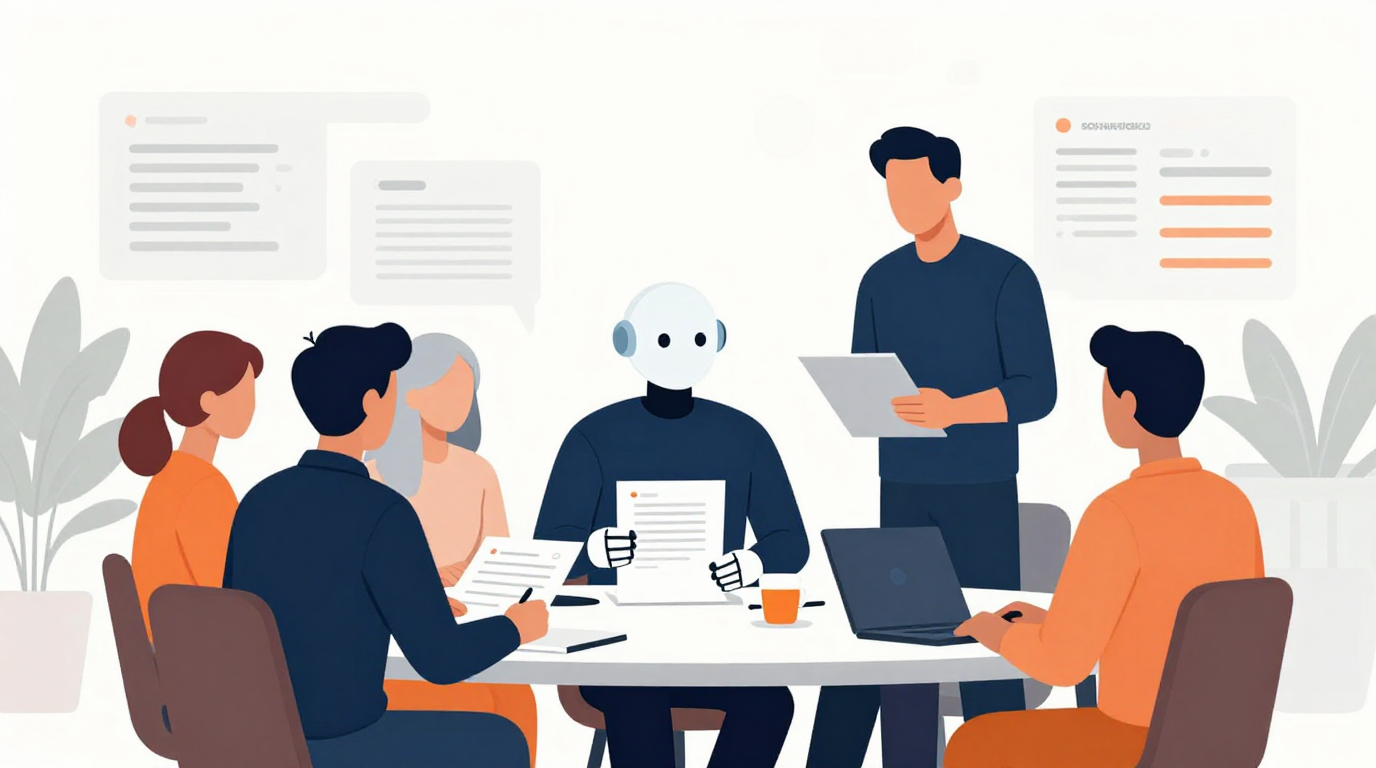
AI agents are increasingly being deployed inside enterprise environments with access to systems, data, and business workflows.
They are not passive software components. They are identity-bearing actors capable of taking actions on behalf of users, teams, or entire processes.
That shift creates a governance problem most organizations have not fully operationalized.
The core issue is not whether AI agents are intelligent or autonomous. It is how much authority they are granted inside enterprise systems, and whether that authority is governed with the same discipline used for human employees.
The most practical governance model is straightforward. AI agents should be treated like internal employees for access, identity, monitoring, and lifecycle control, even though they are not human.
Why the Employee Model Maps Cleanly to AI Agents
Traditional enterprise software is deterministic. It performs defined functions within fixed boundaries.
AI agents behave differently. They interpret inputs, make decisions within goals, call tools, retrieve data, and execute multi-step workflows that may run continuously and adaptively.
That behavior resembles operational participation more than static software execution.
Employees represent the closest existing governance model organizations already understand.
They are granted identity. They receive scoped access. Their activity is logged. Their behavior is monitored. Their access is reviewed. When they leave, access is revoked through structured offboarding.
AI agents now occupy a structurally similar position inside enterprise systems.
The key governance principle is not equivalence of form. It is equivalence of authority.
Where the Employee Analogy Breaks Down
The model is useful, but incomplete.
Human employees operate within behavioral, legal, and cultural constraints. Accountability frameworks are designed around intent, judgment, and organizational norms.
AI agents do not operate within those same constraints.
Instead, risk shifts from behavioral failure to structural failure. Misalignment, unsafe tool usage, uncontrolled propagation of actions, and unexpected system interactions become the dominant concerns.
Employee governance relies heavily on training and oversight.
Agent governance relies on design constraints, identity boundaries, runtime controls, and enforced limitations on system actions.
AI Agent Risk Is Structural, Not Behavioral
These categories show why traditional application security models are insufficient. Risk is not contained within the system boundary. It emerges from how the system behaves inside an operational environment.
Governing AI Agents Across Their Lifecycle
The most effective governance model mirrors employee lifecycle control. AI agents should be treated as managed identities from the moment they are introduced.
During onboarding, each agent should have a defined business owner, technical owner, and risk owner. Purpose and scope should be explicitly documented.
During configuration, access must be tightly scoped to required systems only. Tool usage should be explicitly defined, not implicitly inherited.
During operation, all actions should be logged and observable, including inputs, outputs, tool calls, and decision pathways where possible.
During review, behavior and performance should be evaluated against expected outcomes, with drift triggering reassessment.
Right now the site keeps getting reverted without me being aware of it, which means I end up working off changes that are then lost again. I need a more stable process here so this does not keep happening.
During offboarding, access must be fully revoked and downstream dependencies closed.
AI agents are not static deployments. They are persistent operational identities.
Third-Party AI Agents Expand the Risk Surface
The governance challenge increases when AI agents are introduced via third-party vendors.
In these cases, organizations inherit partial control over model behavior, toolchains, or orchestration layers while remaining responsible for outcomes inside their environment.
This creates a combined risk model spanning vendor risk, identity risk, and operational dependency risk.
The key question becomes: Who is accountable when an external agent acts inside internal systems?
Traditional third-party risk frameworks were not designed for non-human actors with delegated execution capability.
For external agents, governance must extend beyond procurement controls into identity-level attribution, tool visibility, logging requirements, and defined exit mechanisms.
Without these controls, organizations lose visibility into agent behavior once deployed.
A Minimal Viable Control Model for AI Agents
Conclusion
AI agents are not simply tools. They are actors operating inside enterprise environments with delegated authority.
They authenticate, retrieve data, execute workflows, and interact with systems in ways that resemble internal operational roles.
The most effective governance model is not new. It is an adaptation of existing insider risk controls.
If an entity can act inside enterprise systems with delegated authority, it belongs inside the insider risk perimeter.
The employee model works because it already encodes the required governance primitives: identity, least privilege, monitoring, review, and offboarding.
The difference is that AI agents require these controls to be enforced structurally rather than behaviorally.
Organizations that adopt this model early will scale AI adoption with greater confidence, not because risk disappears, but because governance becomes embedded into how the system operates rather than bolted on afterward.

Founder & CEO of TPSaaS, with more than 25 years in cybersecurity, third-party risk, and security assurance. Vic connects practitioner judgment, evidence, and human accountability to better supplier decisions.