Supply Chain Blind Spots in Third-Party Risk
Most organizations underestimate supply chain risk because visibility decays faster than governance can keep up. Blind spots are now a structural condition of modern ecosystems.
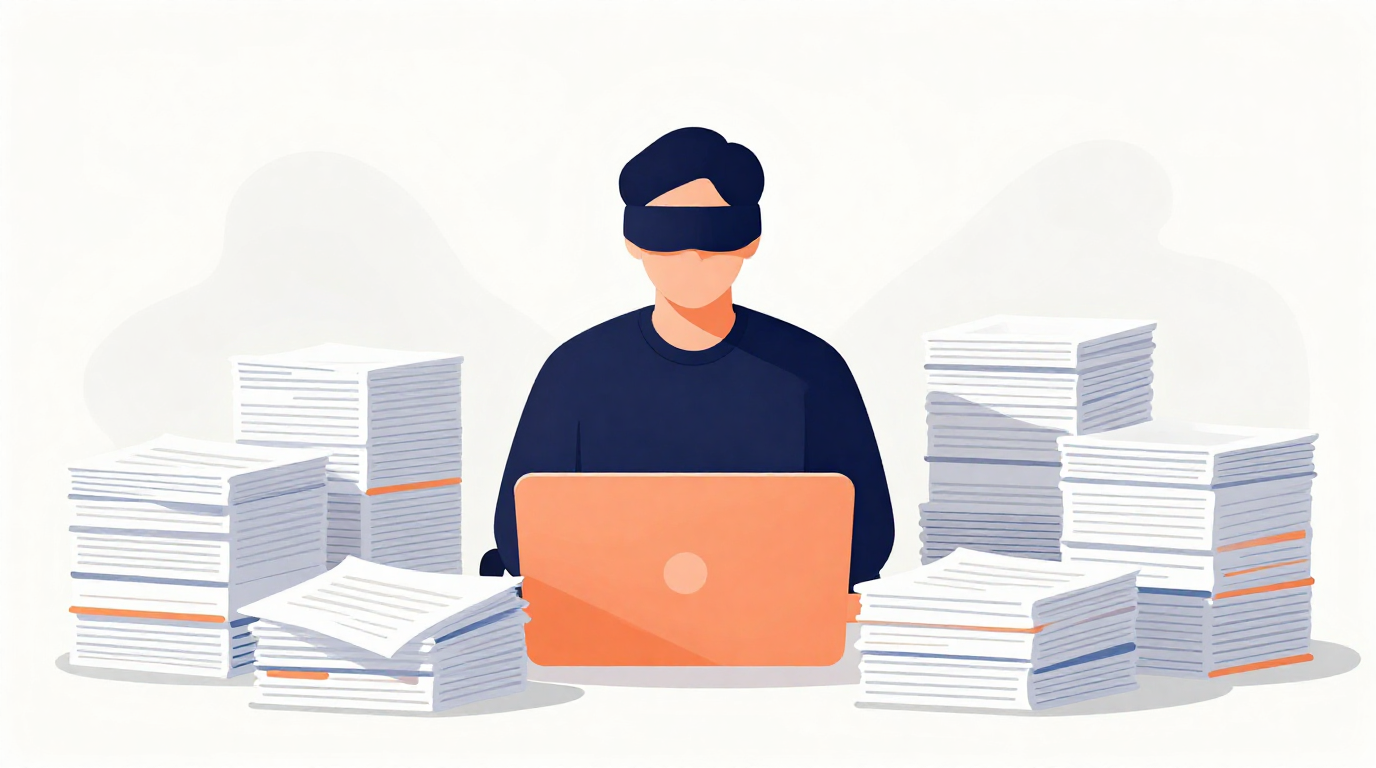
Most organizations believe they understand their supply chain risk.
They have vendor lists. They run assessments. They collect security documentation. They approve integrations through procurement and IT workflows.
On paper, this looks controlled. In practice, most enterprises are operating with incomplete visibility into the dependencies that actually power their business.
Not because teams lack diligence, but because modern environments do not remain stable long enough for point-in-time governance to stay accurate.
Every SaaS application, integration, subcontractor, and cloud dependency expands the operational footprint. Over time, that footprint becomes harder to map, harder to monitor, and harder to govern with confidence.
Blind Spots Are Not Exceptions, They Are the Default
Supply chain blind spots are often treated as exceptions. Something unexpected. Something that “slipped through.”
In reality, they are the default outcome of modern ecosystems.
Most enterprises rely on hundreds or thousands of applications. Each one may be approved individually. Each one may pass security review at a single point in time.
But environments do not remain static after approval.
Vendors introduce new features. Sub-processors change. Integrations expand. Credentials propagate across teams. Shadow tools appear outside procurement workflows. Legacy systems remain active long after ownership shifts.
Individually, these changes appear minor. Collectively, they create a system where the original view of the supply chain no longer matches operational reality.
That mismatch is the blind spot.
Visibility Decay Is the Core Problem
Most organizations already have third-party risk processes in place.
Vendor onboarding exists. Security questionnaires are completed. Contracts define obligations. Reviews occur on fixed cycles.
The issue is not process absence. It is process decay.
A vendor assessed twelve months ago is not the same vendor operating today. Infrastructure changes. Access expands. Dependencies evolve. Security posture shifts.
Yet governance models still treat risk as something that can be periodically validated rather than continuously observed.
Supply Chain Risk Is a Dependency Problem, Not a Vendor Problem
Supply chain risk is increasingly a network problem rather than a procurement problem.
A single SaaS platform may depend on multiple cloud providers, authentication systems, analytics services, and outsourced infrastructure layers.
Each dependency introduces additional risk surface. From the outside, an organization may believe it manages 50 vendors. In reality, it may be exposed to hundreds of downstream services.
The most important risks are often not the visible nodes, but the connections between them.
Why Traditional TPRM Models Struggle
Most third-party risk programs were designed for a slower operational environment.
A vendor was onboarded. Documentation was collected. A risk rating was assigned. Reviews occurred periodically.
That model assumes stability. Modern environments operate on continuous change.
New tools are adopted without centralized coordination. Vendors expand integrations. Engineering teams connect services to accelerate delivery. AI-driven tools introduce new dependencies outside traditional procurement workflows.
This is not a failure of governance. It is a mismatch between governance cycles and operational velocity.
Blind Spots Matter Because Attackers Exploit the Gaps
Attackers do not require a complete map of an environment. They only need one overlooked dependency.
This is why supply chain attacks continue to rise. Instead of targeting hardened enterprise systems directly, attackers focus on:
Once access is gained through a single dependency, it can often be expanded into broader environments.
Impact does not stay isolated. It propagates.
Conclusion
Supply chain blind spots are not the result of poor security practices. They are the predictable outcome of how modern organizations adopt and integrate technology.
The challenge is not whether blind spots exist. They do. The challenge is whether organizations can see them quickly enough to act before they become incidents.
This is where third-party risk management is evolving. From static assessment to continuous visibility. From vendor management to ecosystem understanding. From periodic review to ongoing awareness.
TPSaaS addresses this by creating a continuous view of third-party risk across the vendor lifecycle, helping organizations reduce fragmentation and maintain visibility as their ecosystems expand.
Because in complex environments, security does not come from knowing every vendor once. It comes from knowing what is changing, as it changes.

Founder & CEO of TPSaaS, with more than 25 years in cybersecurity, third-party risk, and security assurance. Vic connects practitioner judgment, evidence, and human accountability to better supplier decisions.