Why Third-Party Risk Management Has Become a Strategic Business Priority
Third-party risk management has evolved beyond vendor questionnaires and compliance requirements. Learn why organizations need continuous visibility into supplier cybersecurity, operational resilience, and business risk.
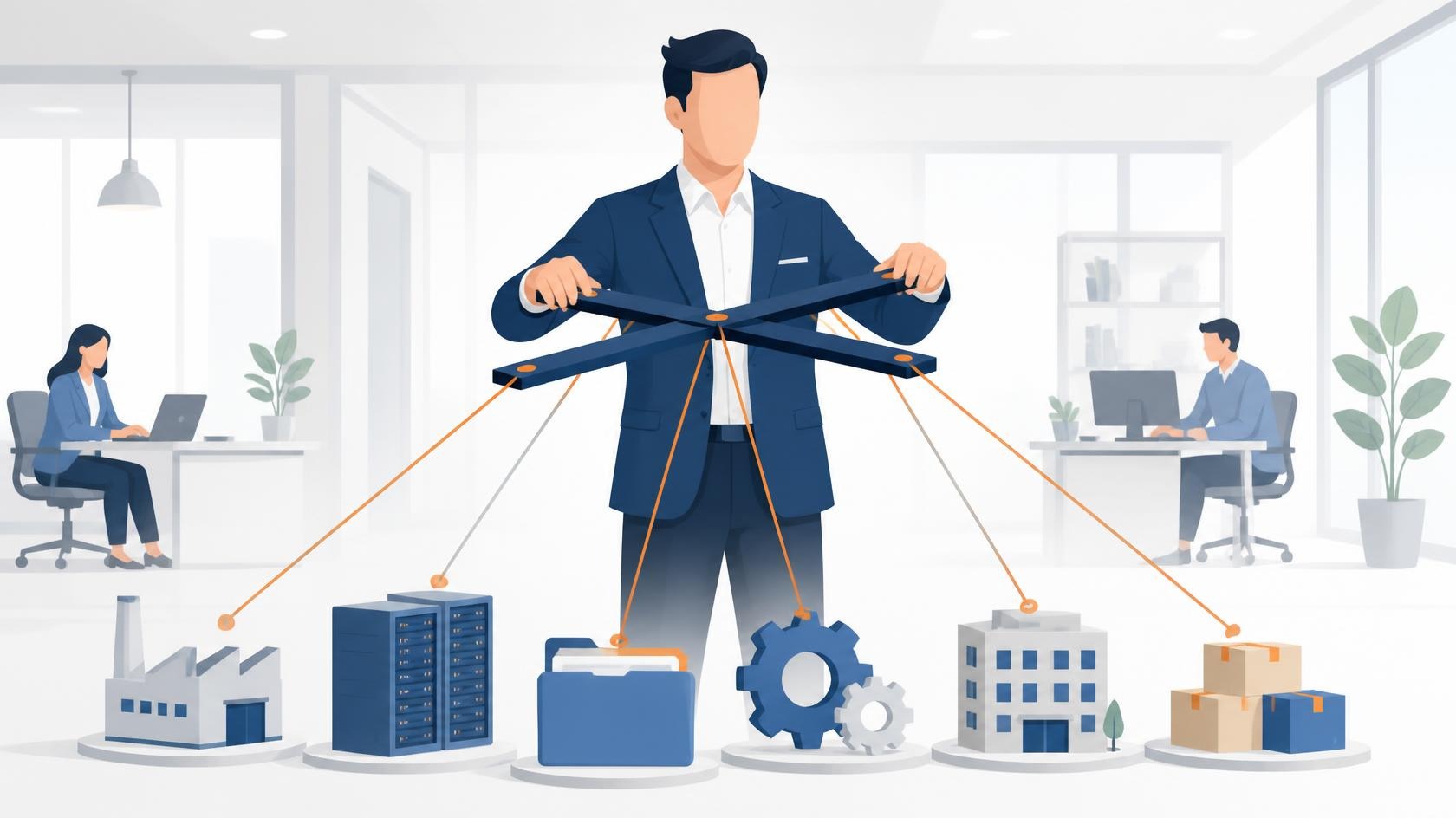
Third-party risk management (TPRM) is the process organizations use to identify, assess, monitor, and manage risks introduced by external vendors, suppliers, service providers, and business partners throughout the relationship lifecycle.
Modern organizations rarely operate independently. Payroll depends on one provider, customer data may sit within another company's cloud environment, logistics rely on external partners, and critical business processes often depend on technology suppliers.
These relationships create efficiency and enable innovation, but they also create dependency.
When a third party experiences a cybersecurity incident, operational failure, compliance issue, or business disruption, the impact often extends beyond that supplier. The organization that relies on the vendor remains responsible for understanding and managing the resulting risk.
This is why third-party risk management has evolved from a procurement requirement into a strategic business capability.
Traditional Vendor Management
Review vendors during onboarding through questionnaires, documents, and periodic assessments.
Modern TPRM
Maintain continuous visibility as suppliers, technologies, and dependencies evolve.
Why Third-Party Risk Has Become More Complex
Historically, many organizations approached vendor risk through a simple process: A supplier was selected. A security questionnaire was completed. Documents were collected. The assessment was archived.
That approach was built for a slower business environment.
Today, organizations rely on increasingly interconnected ecosystems of cloud providers, SaaS platforms, managed service providers, artificial intelligence providers, logistics partners, and specialized technology vendors.
A supplier's risk profile can change quickly.
A vendor may introduce a new subprocessor, change its technology stack, experience a breach, lose a certification, expand into new regions, or introduce new AI capabilities into its services.
The challenge is no longer simply understanding vendor risk at onboarding.
The challenge is maintaining visibility throughout the entire relationship.
Third-Party Risk Is No Longer Just a Cybersecurity Issue
Cybersecurity is a material component of third-party risk, but modern TPRM extends far beyond information security.
A supplier failure can affect business continuity when a critical provider becomes unavailable. It can create regulatory challenges when outsourced activities fail to meet required standards. It can disrupt operations when organizations do not fully understand their dependencies.
Data protection, financial performance, and customer trust can all be impacted by failures outside the organization’s direct control.
Third-party risk has become a business risk because organizations increasingly depend on external ecosystems to operate.
Regulators Are Aligning Around One Principle: Accountability Cannot Be Outsourced
Across major markets, regulators are reinforcing the same expectation: Organizations can outsource activities, but they cannot outsource accountability.
In the United States, financial regulators including the Federal Reserve, FDIC, and OCC have emphasized that institutions remain responsible for managing risks created through third-party relationships.
In Europe, regulations such as the Digital Operational Resilience Act (DORA) place significant emphasis on ICT third-party risk management, including supplier oversight, contractual requirements, monitoring, and exit planning.
In the United Kingdom, FCA operational resilience expectations also address firms’ ability to deliver important business services through disruption.
The message is consistent: organizations must understand their suppliers, manage their dependencies, and maintain appropriate oversight.
The Growing Impact of AI on Third-Party Risk
Artificial intelligence is adding another layer of complexity to supplier ecosystems.
Organizations increasingly adopt AI through third-party platforms, embedded SaaS features, cloud providers, and specialized AI vendors.
This creates new questions for TPRM programs.
How is supplier data used within AI systems? What third-party models or providers support the service? What controls exist around AI access and permissions? How does the supplier monitor AI-related risks?
The same technology that creates opportunities for efficiency can also introduce new dependencies and attack surfaces.
Forward-looking organizations are beginning to treat AI capabilities as part of supplier risk assessments rather than as a separate technology discussion.
Third-Party Risk
Understanding how external relationships impact business operations.
Cybersecurity
Security posture, vulnerabilities, access controls, and incidents.
Operations
Dependencies that affect availability, resilience, and continuity.
Compliance
Regulatory obligations and supplier governance requirements.
Technology
AI, integrations, APIs, and changing vendor capabilities.
What Effective Third-Party Risk Management Looks Like
Modern TPRM programs move beyond isolated assessments and focus on the full supplier lifecycle.
The process begins before onboarding by understanding what service is being provided, what data is involved, what systems are accessed, and what level of risk the relationship creates.
Risk-based tiering ensures that critical suppliers receive appropriate scrutiny while lower-risk vendors are managed efficiently.
Due diligence provides insight into supplier security practices, compliance posture, resilience capabilities, and operational maturity.
Ongoing monitoring helps organizations understand when supplier risk changes after onboarding.
Secure offboarding ensures access is removed, data is returned or deleted, and supplier relationships are properly closed.
The goal is not simply to collect more documentation. The goal is to create better decision-making.
The Problem With Traditional TPRM Approaches
Many organizations still rely heavily on spreadsheets, email-based assessments, and disconnected tools to manage suppliers.
These approaches create challenges because risk information becomes fragmented across teams, assessments become outdated quickly, critical suppliers may not receive appropriate attention, and leadership often lacks a complete view of supplier exposure.
As supplier ecosystems grow more complex, manual processes create friction and reduce visibility.
Moving Toward Continuous Third-Party Assurance
The future of third-party risk management is not about eliminating assessments. It is about improving how organizations understand risk between assessments.
Organizations need a more connected approach that combines structured workflows, risk-based decision-making, continuous visibility, and human expertise.
Technology can streamline evidence collection, automate workflows, identify meaningful changes, and improve reporting. However, supplier risk decisions still require context, judgment, and accountability.
The strongest programs combine purpose-built platforms with experienced practitioners who understand how supplier relationships affect business operations.
Onboard
Understand inherent risk before the relationship begins.
Assess
Evaluate security, compliance, and operational controls.
Monitor
Identify changes as vendors, technology, and risks evolve.
Act
Prioritize remediation and make informed business decisions.
How TPSaaS Supports Modern Third-Party Risk Management
TPSaaS helps organizations manage third-party security risk across the entire supplier lifecycle by combining a purpose-built platform with practitioner-led assurance.
The platform supports structured vendor intake, risk tiering, assessments, remediation tracking, continuous monitoring, reporting, and secure offboarding.
Rather than relying on disconnected spreadsheets and manual processes, teams gain a shared source of truth across procurement, security, compliance, and governance functions.
This enables organizations to understand which suppliers matter most, where risks exist, and what actions are required.
Conclusion
Third-party risk management has changed.
Organizations are no longer managing simple supplier relationships. They are managing interconnected ecosystems that influence cybersecurity, compliance, resilience, and business performance.
The companies that succeed will be those that move beyond periodic vendor reviews and build continuous visibility into their supplier environment.
TPRM is no longer just about asking whether a vendor is secure.
It is about understanding how suppliers affect an organization's ability to operate, protect customers, and respond when something changes.
Frequently Asked Questions
What is third-party risk management (TPRM)?
Third-party risk management is the process of identifying, assessing, monitoring, and managing risks created by external suppliers, vendors, service providers, and business partners.
Why is third-party risk management important?
Organizations rely on external providers for critical business operations. A supplier's cybersecurity incident, operational failure, or compliance issue can directly affect the organization that depends on them.
How is modern TPRM different from traditional vendor management?
Traditional vendor management often focuses on onboarding reviews and contract requirements. Modern TPRM includes continuous monitoring, risk-based assessments, remediation tracking, and lifecycle management.
Can organizations outsource third-party risk?
Organizations can outsource activities to suppliers, but they remain accountable for understanding and managing the risks created by those relationships.
How does AI impact third-party risk management?
AI increases third-party risk because organizations increasingly rely on external AI providers and embedded AI capabilities. These relationships introduce new data, access, and governance considerations.
Why are annual vendor assessments no longer enough?
Annual assessments provide a point-in-time view of supplier risk. Continuous third-party risk management helps organizations identify important changes that occur between formal reviews.
Sources and references

Founder & CEO of TPSaaS, with more than 25 years in cybersecurity, third-party risk, and security assurance. Vic connects practitioner judgment, evidence, and human accountability to better supplier decisions.